LLM application testing for features that do not fail like normal code
LLM application testing checks AI features the way they actually break: it scores factual accuracy against golden answers, probes for prompt injection and jailbreaks, validates multi-turn conversations, and gates on aggregate scores instead of brittle exact-match assertions.
- Model output is non-deterministic, so exact-match assertions are useless.
- Prompt injection and jailbreaks ship untested because nobody owns them.
- A prompt or model swap silently regresses answer quality.
Why AI features need their own testing
You cannot assert an exact string against a model that paraphrases. LLM features fail in ways traditional automation never checks: confident hallucinations, prompt injection, broken tool calls, context lost across turns. Those failures reach users precisely because the existing test suite has no way to see them.
How BugBrain does LLM application testing
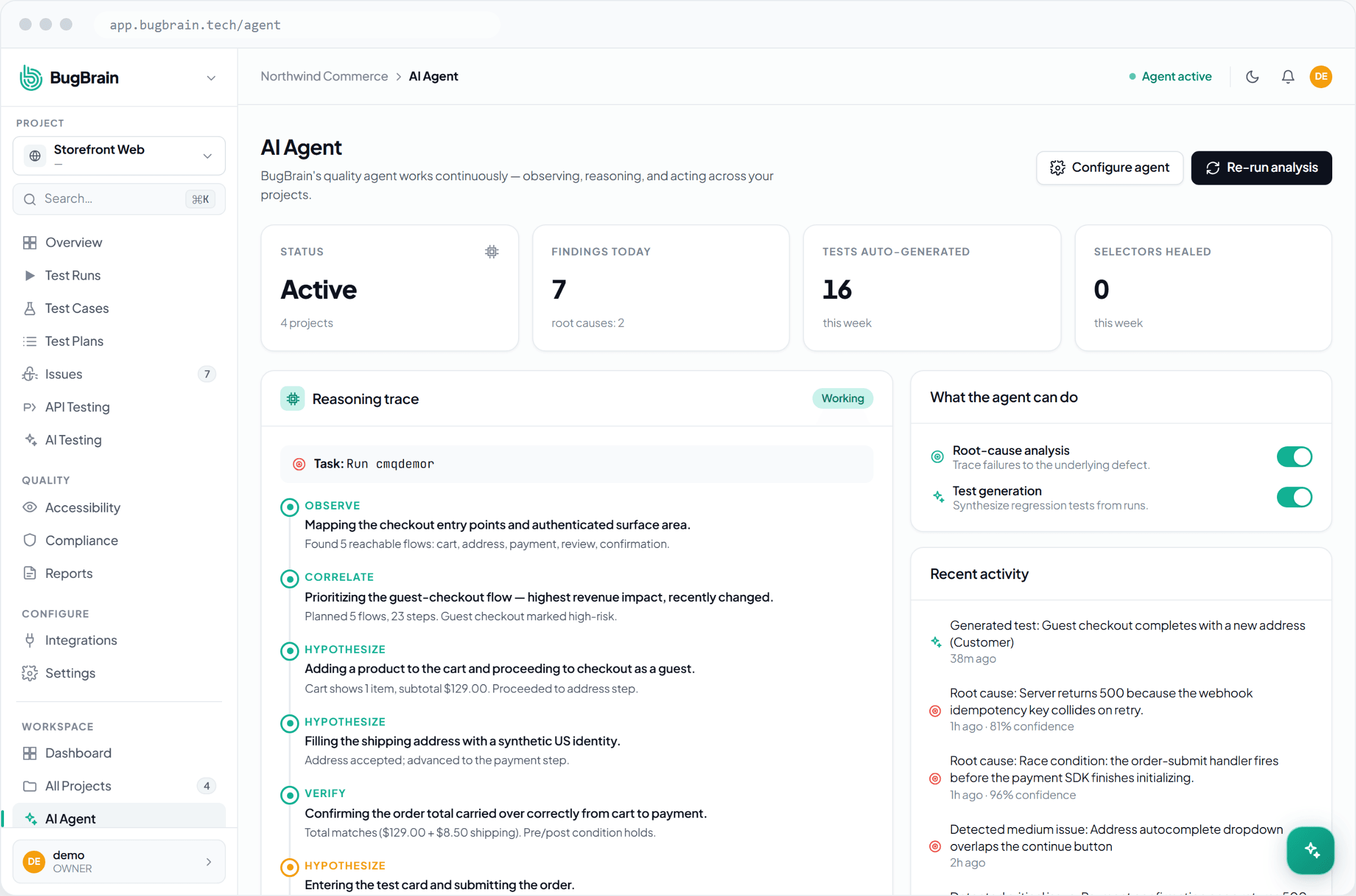
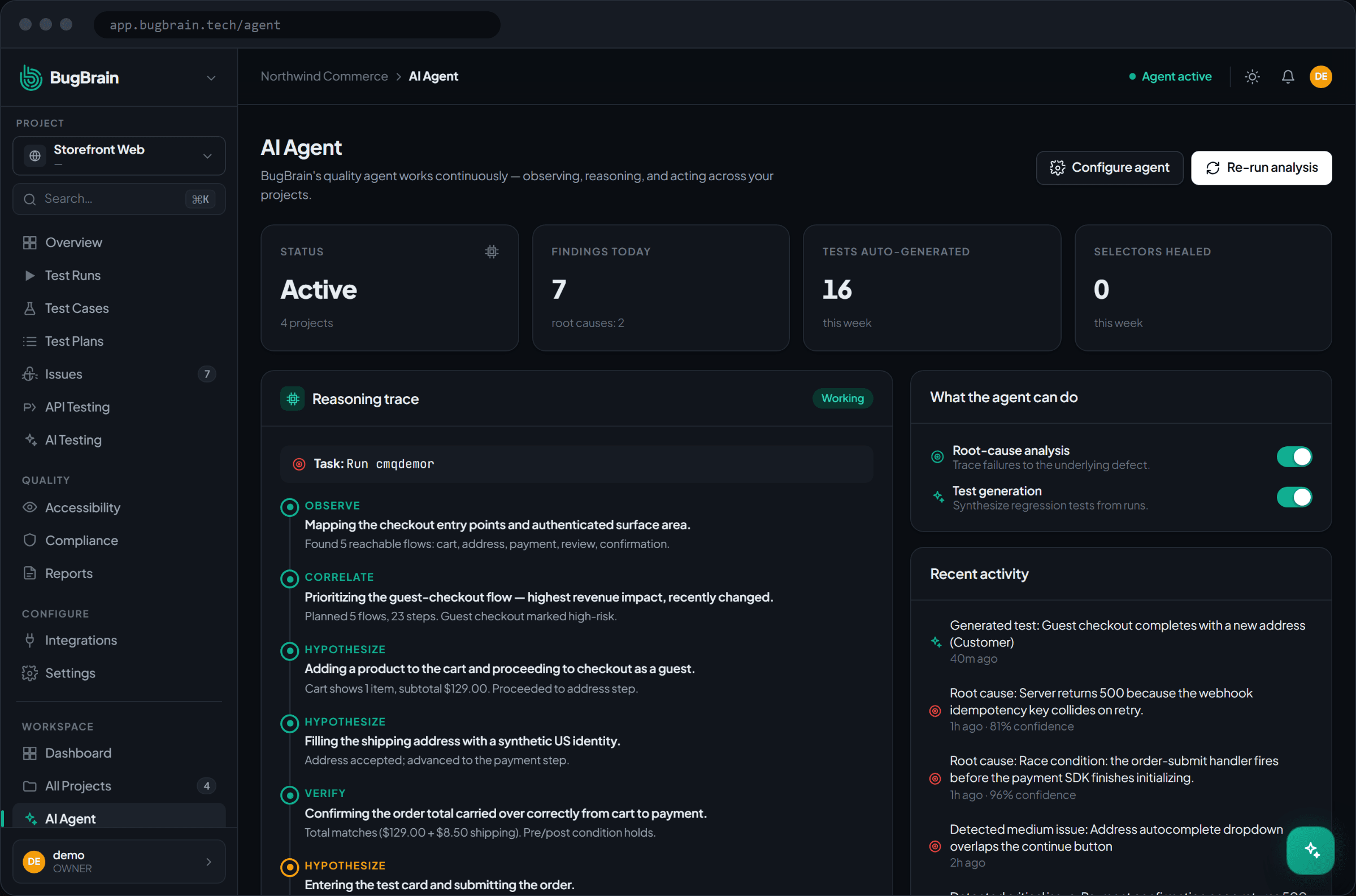
Point BugBrain at your chatbot, agent, or LLM endpoint and it runs the checks that matter: factual-accuracy scoring with judges and golden answers, adversarial prompt-injection and jailbreak probes, tool-use correctness, and multi-turn conversation validation. It gates on aggregate scores, so a passing release is a real quality bar, not a lucky exact match.
What you get
- Hallucination and factual-accuracy scoring
- Prompt-injection and jailbreak probes
- Tool-use and multi-turn conversation checks
- Score-based gates instead of brittle assertions
Frequently asked questions
What is LLM application testing?
LLM application testing evaluates AI features by scoring outputs against criteria instead of exact matches: factual accuracy, prompt-injection resistance, tool-use correctness, and multi-turn conversation quality, then gating releases on aggregate scores.
What kinds of AI apps can it test?
Chatbots, conversational agents, and custom LLM endpoints. It covers prompt consistency, hallucination, toxicity, prompt injection, context retention, and tool-use correctness as an add-on.
How is this different from testing an AI chatbot for QA?
The chatbot QA use case is the job to be done; this page is the underlying LLM-application-testing capability that also covers agents and raw endpoints, not just chat UIs.
See it on your own app
Start free in minutes. No credit card, and no scripts to write.